When the Sky Joins the Crew: Directing Weather Instead of Rescheduling It
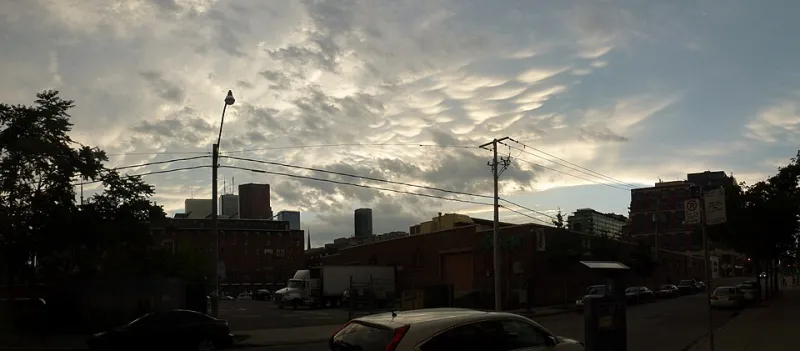
Photo: OldYorkGuy, CC BY-SA 3.0, via Wikimedia Commons
The phone call usually comes the night before a session. A storm front is rolling in, the client is nervous, and someone is reaching for the reschedule button. At Majestic Imagery, we have learned to answer that call differently: the weather is not canceling your portrait. It is arriving early to work the set.
Dramatic imagery — the kind that stops a viewer mid-scroll and holds an heirloom on a wall for decades — rarely comes from clear skies and polite light. It comes from atmosphere. And atmosphere, unlike a softbox, cannot be purchased. It can only be anticipated.
Fog: The Great Sculptor of Depth
Fog is the most misunderstood tool in the American photographer's kit. Amateur shooters flee it because it flattens contrast; professionals chase it because it does something no artificial light can — it turns distance into a visible, physical substance.
When fog hangs over a coastal headland in Maine or settles into a Tennessee valley at dawn, every layer of the frame separates. Your subject stands crisp in the foreground while the world behind them dissolves into graduated veils of gray. That natural separation is what studio photographers spend thousands of dollars on haze machines to imitate, poorly.
Practically speaking, fog rewards early risers. It forms on calm, humid nights when the ground cools quickly, which is why river towns and low-lying farmland produce it so reliably in autumn. Arrive before sunrise, meter for your subject, and expose slightly brighter than the meter suggests — fog fools meters into underexposing. Dress your subject in mid-tones rather than black, and let the atmosphere do the rest of the storytelling.
Storm Light: Contrast No Softbox Can Sell You
There is a window that photographers in the Plains and the Southwest guard like a trade secret: the minutes before and after a storm breaks. Cumulonimbus towers on the horizon block the low sun, then split it into shafts of light that spotlit the landscape like a stage rig.
This is the light of cinematic Westerns and the dramatic skies over Tornado Alley — deep, directional, and tinted with a saturation that clear-sky light simply cannot produce. Rain-washed air scatters less haze, so colors render with unusual intensity. Dark clouds behind your subject act as a natural black backdrop, making skin tones and white dresses pop with a brilliance that reads as editorial even in a corporate portrait.
The craft lies in safety and timing. We watch radar the way a director watches dailies. If lightning is within striking distance, the session moves indoors or to the vehicle — no photograph is worth the risk. But if the cell is passing ten miles east, you position your subject with the storm behind them, wait for the sun to find a gap, and shoot the five minutes of your career your portfolio will be built on.
Rain: Specular Drama, Free of Charge
Rain is the most negotiable of the dramatic conditions. A light, warm-weather shower transforms streets into mirrors, doubles every city light, and puts a jeweled sheen on umbrellas, wool coats, and brick. Downtown Nashville after a summer rain, or a Seattle side street in November drizzle, offers reflections and specular highlights that make an image feel alive — wet, kinetic, present.
The technique is straightforward. Backlight the rain so each drop catches the light. Get low, so the wet pavement becomes a second canvas. Protect the glass with a lens hood and a towel you do not mind sacrificing. And brief your subjects honestly: a couple laughing under one umbrella is not a compromise shot. It is often the frame they frame.
A Seasonal Cheat Sheet for Planning Ahead
Because dramatic weather is regional, so is the planning. A rough map for American clients:
- Gulf Coast and the Southeast, June–September: Afternoon heat builds towering cumulus by 3 p.m. and humidity haze that turns every sunset into a pastel wash. Schedule for the hour before an evening storm for the most dramatic sky.
- Northeast, October–March: Nor'easters deliver brooding pre-storm light — low, silver, and moody — ideal for dramatic environmental portraits. The day after a snowfall, blue-sky clarity is unmatched.
- The Plains and Southwest, April–June: Supercell season produces the tallest clouds on the continent. Chase the edges, never the core, and the contrast will be legendary.
- Pacific Northwest, October–April: Mist, drizzle, and evergreen fog forests make for sculpted, painterly depth year-round. Rain gear is not optional; it is wardrobe.
- Mountain West, July–August: Monsoon moisture builds afternoon cloud cathedrals over peaks. Mornings are clear; late afternoons are theater.
The Mindset Shift
The reason most portfolios look alike is that most sessions happen in the same polite light. The frames that become legendary — the ones a couple prints at forty inches wide, the ones a brand builds a campaign around — tend to have a little chaos in them. Wind in the dress. Storm light on the skyline. Fog swallowing the valley behind a bride.
So the next time the forecast turns, before you reach for the phone to reschedule, ask the better question: what is the sky offering us today? More often than not, it is offering the best frame of the year — and it is working for free.