The Face That Ships the Product: Casting Your Workforce Into the Campaign
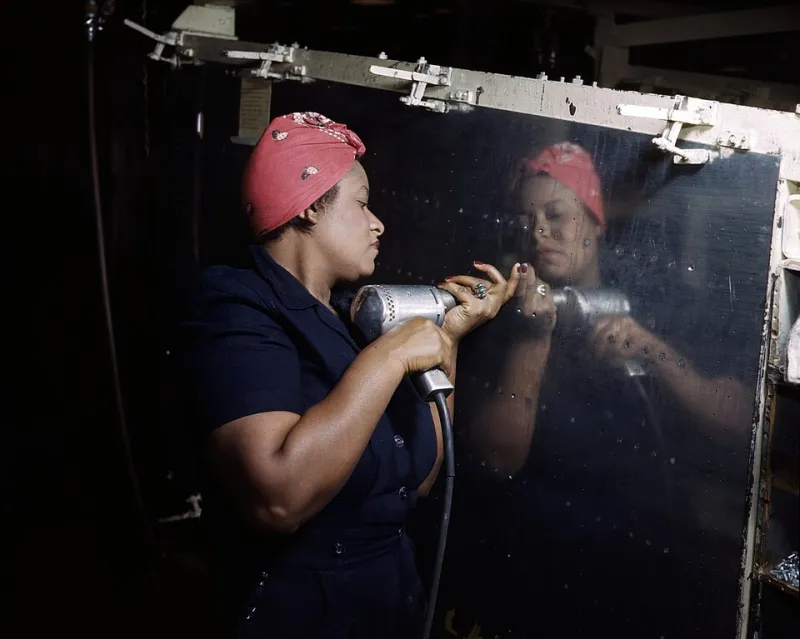
Photo: Alfred T. Palmer, Public domain, via Wikimedia Commons
There is a moment on every commercial set that separates the studios that talk about authenticity from the ones that deliver it. It happens when the model — polished, punctual, perfectly rehearsed — steps away from the workbench, and the machinist who has run that lathe for eleven years steps in front of the seamless paper. The hands are different. The posture is different. And without fail, the photograph becomes more interesting.
We have spent the past several years watching American companies make this swap deliberately, and we no longer consider it a trend. It is a competitive position, and the photographer's job has quietly changed because of it.
The Credibility Deficit of the Perfect Stranger
Audiences have become fluent in the grammar of stock photography. They can spot the rented smile, the too-clean warehouse, the handshake between two people who have clearly never met. That fluency costs brands real money, because every synthetic frame invites a small, silent discount on the claim being made.
When a Cleveland manufacturer puts its actual quality-control lead in the campaign, the photograph makes a different argument: we are not asking you to trust an actor; we are asking you to trust the person who signs off on every unit that leaves this floor. That argument cannot be purchased from a casting database. It can only be cast from the payroll.
The Photographer as Casting Director
This shift changes our role more than clients expect. A beautifier smooths, retouches, and flatters. A casting director studies, selects, and stages. When the subject pool is your workforce, the first and most important work happens before a single light stands.
We spend time in the facility before the shoot — not scouting light, watching people. Who explains their work with their hands? Who does the new hires gravitate toward? Who laughed when the camera came out, and who went quiet? Neither is disqualifying; they simply belong in different frames. The evangelist belongs in the hero portrait. The quiet one often belongs in the detail shot, hands in frame, face partly out of it. Both are honest. Both are casting decisions.
Preparing the Untrained Face
The myth is that employees are camera-shy and models are camera-ready. The truth is that untrained subjects are simply un-rehearsed, and rehearsal is a craft we can provide.
- A conversation, not a briefing. We never open with posing. We open with questions about the work itself. The moment someone starts explaining what they love about their job, their face stops performing and starts belonging.
- Motion before stillness. Asking a nervous subject to stand still is asking them to think about being looked at. We photograph people doing — adjusting, demonstrating, walking the line — and let the stillness arrive on its own.
- Lighting that forgives without flattering. Professional faces are built for hard light. Untrained faces are not. We soften key sources, raise fill, and use larger modifiers so the subject feels safe rather than scrutinized. The goal is dignity at high resolution, not glamour at any cost.
- The ten-minute rule. Nearly every non-professional subject turns a corner after roughly ten minutes of shooting. We plan the schedule around that curve, saving the hero frames for after it, not before.
What the Campaigns Earn
The companies that commit to this approach report the same pattern. Recruitment pages convert better because candidates recognize the environment and the people in it. Trade-show booths start conversations because attendees ask about the technician in the photograph rather than the product in the case. Internal morale shifts, because the employee on the billboard is, in the most literal sense, seen.
One regional bank we worked with replaced its stock imagery with portraits of its actual branch managers. The photographs were objectively less polished. They were also unmistakably real — and the bank's own marketing team admitted the campaign generated more unsolicited customer comment than anything they had run in a decade.
A Higher Standard, Not a Lower One
Let us be clear about what this is not. Casting real people is not an excuse for sloppy craft. An employee portrait shot badly is worse than a model shot well, because it wastes the very credibility it was meant to capture. Authenticity is the argument; craft is what makes the argument land.
The legendary campaigns of the next decade will not be the ones with the most beautiful strangers. They will be the ones where the face in the frame and the product in the hand share a history. Our job is to find that history, light it properly, and make sure the country believes every pixel of it.