Twenty Years From Now, Today's Photograph Becomes a Family Heirloom
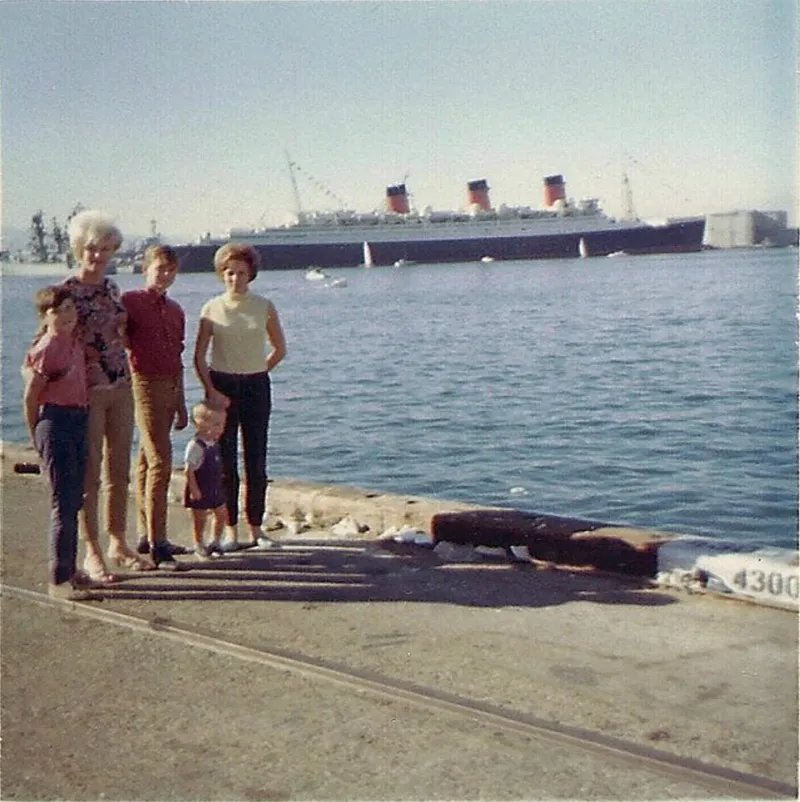
Photo: George, CC BY-SA 2.0, via Wikimedia Commons
There is a moment that happens in nearly every studio, and it never makes it into the marketing brochure. A client — often someone who was skeptical about booking the session in the first place — stands in front of a framed print and goes quiet. Sometimes it is a mother looking at a portrait of her children. Sometimes it is a founder looking at the image that will anchor her company's story. Invariably, the same sentence follows: I can't believe almost didn't do this.
That pause is the entire business case for professional photography, and almost nobody talks about it, because the value being felt in that moment has nothing to do with the week the photograph was made.
The Delayed Dividend
American commerce is built on immediate returns. We A/B test ads in hours, measure campaigns in days, and judge a portrait session by how good we look in the proofs by Friday. It is an understandable instinct, but it fundamentally misprices what a photograph is.
A photograph is one of the only purchases a family or a business makes whose value increases with time. A wedding gown is worn once. A website redesign is outdated in three years. But a portrait of your parents, taken with intention and craft, becomes more precious with every passing year — not because the paper changes, but because the people in it do.
Consider the stories that surface whenever families downsize an old American farmhouse. A shoebox of negatives from a 1950s portrait session in Des Moines. A studio photograph of a couple on their wedding day in Savannah, printed on fiber paper that has outlived everyone who bought it. When those images resurface, they are treated like treasure. Nobody asks what the session cost. They ask what the people in the frames were like.
Brands experience the same phenomenon. Companies that commission a serious photographic archive — real portraits of their founders, their craftspeople, their storefronts in a particular year — are often startled a decade later to discover those images have become their most valuable communications asset. The archive becomes proof of continuity. It says: we were here, we did the work, we endured.
Why the Cheap Version Fails Later
The objection always arrives on schedule: phones take perfectly good pictures, so why pay for craft?
Because the archive effect only works when the image survives. The average smartphone photo is taken, glanced at, and buried under six figures of subsequent images in a camera roll no one will ever excavate. Compression, cloud migrations, and dead passwords do the rest. The casual image is designed for the moment; the professional image is designed for the afterlife.
Craft matters for a second reason, too. Twenty years from now, your grandchildren will not care that the photo was convenient. They will care whether it tells them something — about how you carried yourself, how the light fell in that kitchen, what your family looked like when it was young. That legibility across generations is precisely what technical skill, deliberate lighting, and honest direction produce. It is not an accident. It is authorship.
A Framework for Shooting With Legacy in Mind
If the true return on a photograph is measured in decades, then shoots should be planned that way. Three principles, drawn from how the best archives we've studied were actually built:
Shoot the ordinary on purpose. The archival photographs people cherish are rarely the posed holiday card. They are the portrait in the workshop, the family on the porch, the team in the room where the work actually happened. Document your real environment, not just your best angle.
Print what matters. A file is a rumor; a print is a fact. Choose a small number of images each year and commit them to archival paper and proper framing. Twenty years from now, the physical objects will be the ones that survived every device you've since abandoned.
Repeat on a rhythm. A single session is a snapshot; a series is a story. Families who photograph on a rhythm — every few years, at the same scale and seriousness — end up with something that reads like a chronicle. Businesses that commission a portrait of their team annually build an archive that future employees will study the way historians study ledger books.
The Long View
We are a culture fluent in the present tense. But every legendary archive — every family album that outlived its makers, every brand library that carried a company through a rebrand and a recession — began the same way: someone decided that a particular year, and the people living it, deserved to be recorded properly.
The photograph you commission today will not feel priceless this year. It may not feel priceless for twenty. But someday, someone you love — or someone you hired, or someone who inherited what you built — will hold it and understand exactly who you were. That is not an expense. That is the most patient investment available to an American family or business.
Shoot for the decade, not the day.